A comprehensive termite inspection melbourne in Victoria combines thermal imaging with AS 3660.2 compliance. Thermal cameras detect temperature patterns behind walls, revealing potential termite activity without seeing individual insects. MelBuzz17 Pest Control utilizes this technology alongside moisture meters and borescopes for thorough property assessments.
Understanding AS 3660.2 Compliance & Licensing in Victoria
AS 3660.2 compliance governs every legitimate termite management activity in Victoria. The Australian Standard AS 3660.2: 2017, titled Termite Management in and around Existing Buildings, establishes the mandatory framework for inspection, reporting, and treatment protocols. Property owners who engage a non-compliant inspector risk receiving documentation that fails to satisfy legal and insurance requirements, leaving structural vulnerabilities undetected and unprotected.
The revised standard took effect at the end of 2017. Professional indemnity insurers redesigned their paperwork around the changes, reflecting the heightened contractual obligations between the termite manager and the client. For Victorian homeowners and commercial property managers, this regulatory shift means that inspection reports generated under outdated practices no longer meet the benchmark for due diligence.
What does a Victorian pest control licence confirm?
A pest control licence in Victoria confirms that the holder has satisfied the Department of Health17s competency and safety requirements for chemical handling and pest management. MelBuzz Pest Control holds Victorian Department of Health Pest Control Licence (PCL) L012854. This licence authorises the company to conduct professional pest inspections and apply regulated termiticides across residential and commercial properties throughout the state.
Licensing serves as the first filter for property owners. An unlicensed operator cannot legally perform termite work, and any report produced outside the licensing framework carries no standing with insurers or conveyancing authorities.
How does AS 3660.2 shape a termite inspection report?
The standard dictates the structure, scope, and evidentiary requirements of every compliant report. Technicians must document the inspection methodology, identify high-risk zones, and record findings with sufficient detail to support treatment recommendations. MelBuzz Pest Control maintains full AS 3660.2 compliance across all inspections, and the companys technicians are fully licensed, endorsed, and insured.
A compliant report under AS 3660.2 includes:
- A clear description of the inspected areas and any access limitations
- Evidence of termite activity or damage, supported by diagnostic tool readings
- A risk assessment of conditions conducive to future infestation
- Recommended management strategies aligned with the standards treatment hierarchy
Property owners who bypass these requirements receive documentation that may not withstand scrutiny during a property transaction or insurance claim. The standard exists to close precisely that gap.
What happens when an inspection falls short of the standard?
Non-compliant inspections expose property owners to unquantified risk. Insurers may decline claims tied to termite damage when the inspection report fails to meet AS 3660.2 documentation thresholds. Conveyancing delays arise when a pre-purchase termite inspection lacks the required detail, forcing buyers to commission a second inspection at additional cost.
MelBuzz Pest Control addresses this risk through systematic adherence to the standards reporting obligations. The companys termite inspection and treatment methodology integrates the diagnostic, documentation, and treatment protocols that AS 3660.2 mandates, ensuring every report meets the evidentiary standard expected by insurers, solicitors, and building surveyors across Victoria.
Pre-Purchase Termite Inspections & 20+ Page Digital Reports
A pre-purchase termite inspection is a professional evaluation of a property to detect termite activity or damage. Termites damage a home’s structure without obvious signs, leaving buyers with expensive repairs if the problem goes unchecked. Skipping this critical step before settlement transfers that financial risk directly to the new owner.
Licensed inspectors search for active termite colonies, signs of past termite damage, and conditions that make homes vulnerable to infestations. The inspection covers accessible interior and exterior areas, including roof voids, subfloors, and garden timbers. Every finding is documented with precision because the report becomes a negotiation tool. Buyers use the documented evidence to request repairs, adjust the purchase price, or withdraw from a compromised property entirely.
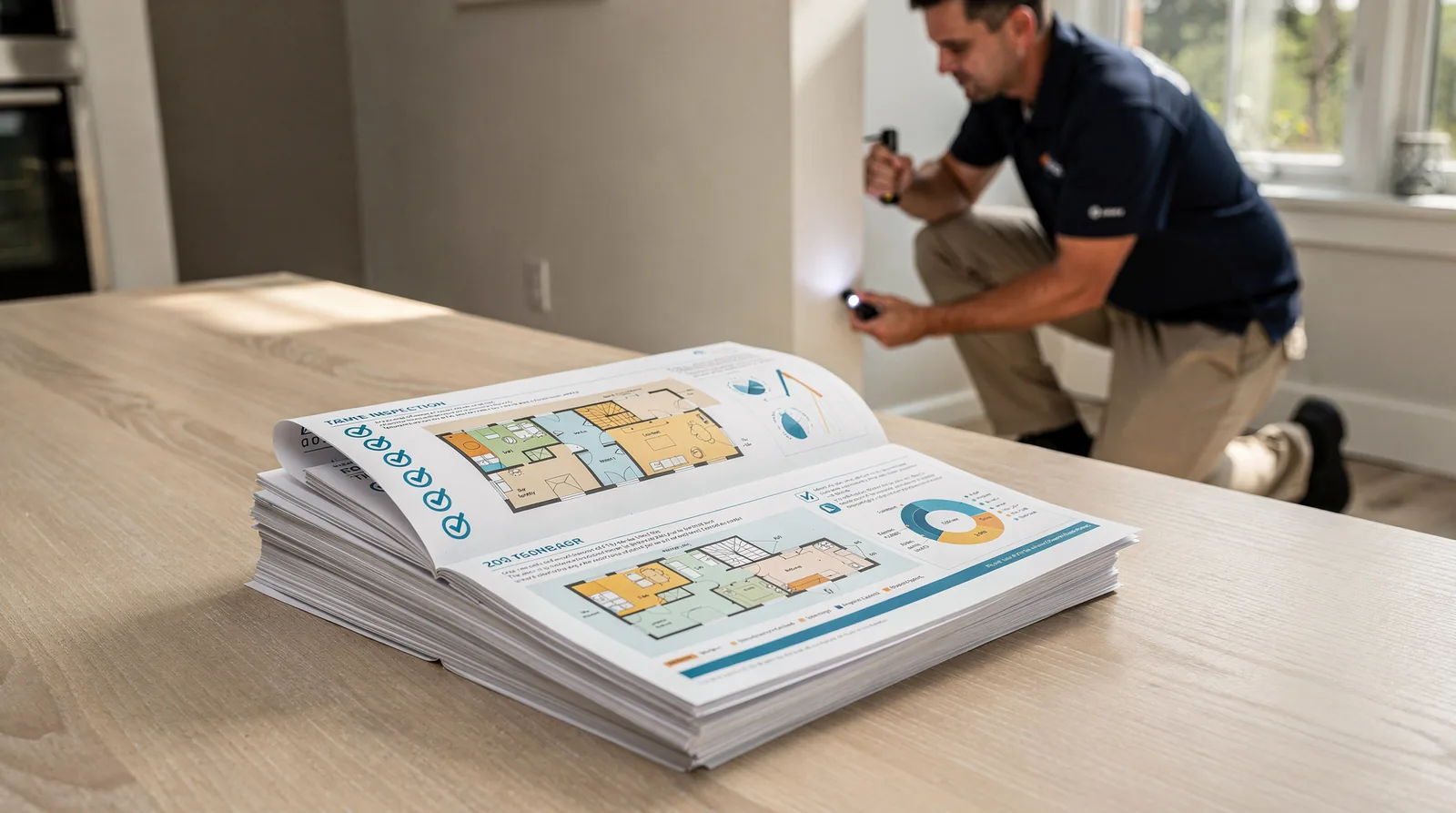
MelBuzz Pest Control delivers a comprehensive 20+ page digital inspection report with high-resolution photos for pre-purchase property evaluations. The report transforms invisible risk into visible, documented fact. Each page serves a specific purpose: photographic evidence of current activity, moisture readings that reveal conducive conditions, and clear recommendations for treatment or ongoing management.
What does a pre-purchase termite inspection report include?
The digital report contains high-resolution photographs of every area inspected, including thermal anomalies and moisture-affected zones. Detailed findings describe active termite colonies, past damage, and structural vulnerabilities. The report also provides a clear treatment recommendation and a maintenance schedule to prevent future infestation.
How quickly can buyers receive the inspection report?
Rapid turnaround for time-sensitive pre-purchase property evaluations ensures buyers receive the complete digital report within 24 hours of the on-site inspection. This speed matters when cooling-off periods are running and competing offers are on the table. The report arrives as a secure digital file ready for immediate sharing with solicitors, conveyancers, and building inspectors.
A thorough pre-purchase termite and timber pest inspection gives buyers the confidence to proceed with their purchase and negotiate necessary repairs or treatments before closing. Without it, a buyer inherits every hidden defect the seller either did not know about or chose not to disclose. The 20+ page report eliminates that uncertainty with forensic-level documentation that stands up to scrutiny during the settlement process.
Thermal Imaging for Termite Inspections | MelBuzz™ Pest Control
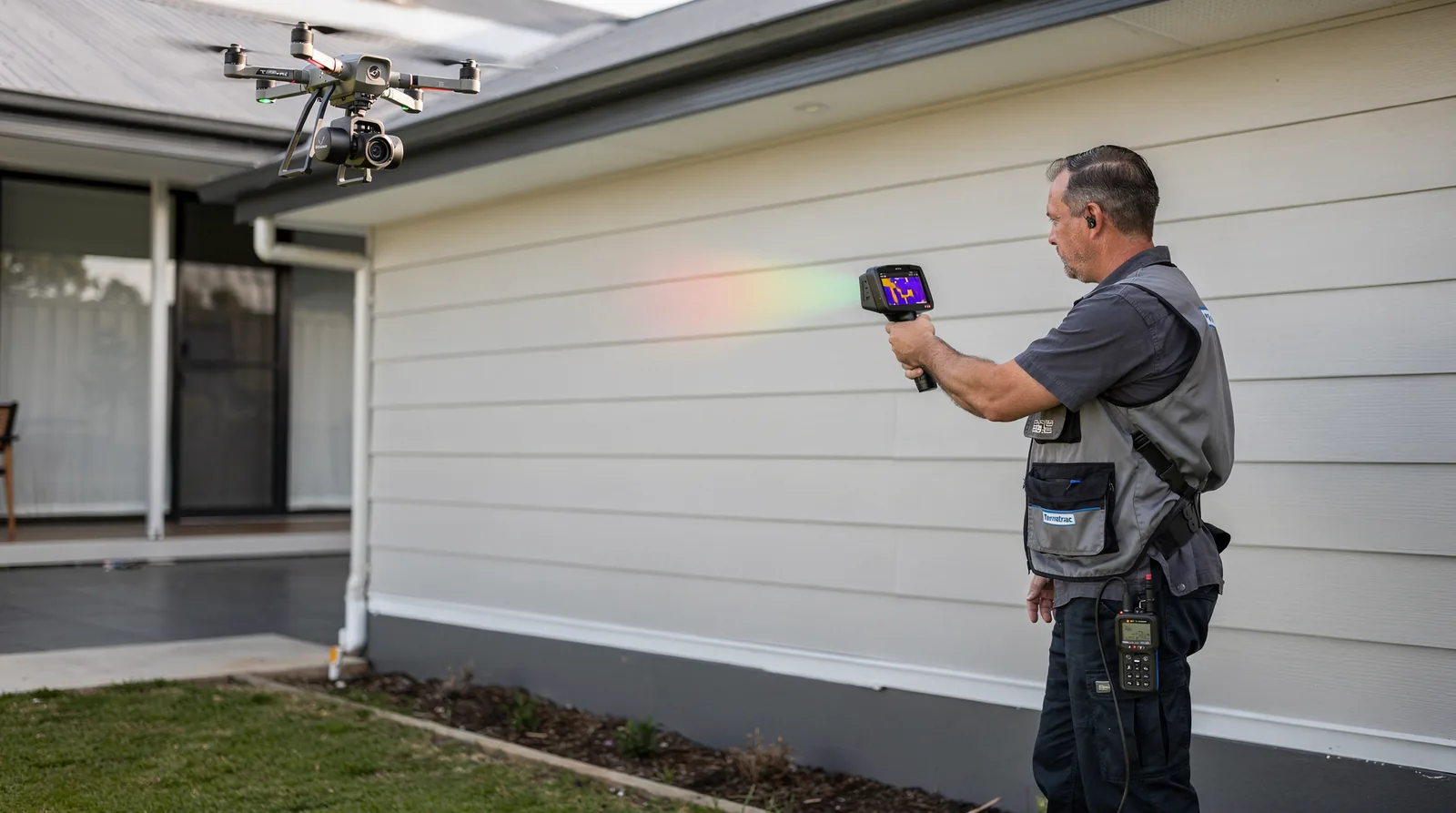
Advanced diagnostic technology transforms termite inspections from visual guesswork into evidence-based assessments. Thermal imaging termite inspection tools detect hidden activity without requiring immediate structural intrusion. Thermal cameras cannot directly see through solid walls or floors, nor can they reveal individual termites hidden within the structure. These devices detect temperature distribution patterns that may be related to termite activity. When used correctly, thermal imaging cameras for termite inspection help pest control professionals identify suspicious areas without the need to open up walls or dismantle flooring immediately.
Subterranean termites that enter a Victorian dwelling rapidly humidify the galleries they inhabit and actively regulate the temperature. This behaviour creates a temperature differential that thermal imaging can detect. Mal Brewer, proprietor of Termite Solutions, explains that termites entering a dwelling rapidly humidify the galleries they inhabit and actively regulate the temperature. The resulting thermal anomaly appears as a distinct pattern on the cameras display, guiding the technician toward areas requiring closer examination.
How does Termatrac technology confirm termite activity without drilling?
Termatrac technology provides non-invasive confirmation of termite presence through radar-based motion detection and precision moisture measurement. The Termatrac device emits a microwave signal that penetrates wall cavities and detects termite movement behind building materials. Precision moisture detection meters then measure elevated moisture levels that termite colonies require for survival. This dual-sensor approach delivers verification without a single drill hole, preserving the integrity of Victorian homes during the inspection process.
MelBuzz Pest Controls diagnostic protocol incorporates advanced tools including Thermal Imaging Cameras, Borescope Cameras, Moisture Meters, and Sounding / Tap Testing. Each instrument serves a distinct role in the detection sequence. Thermal imaging identifies temperature anomalies across large surface areas. Borescope cameras provide visual confirmation inside wall cavities through access points as small as 6 millimetres. Moisture meters quantify dampness levels that attract timber pests. Sounding and tap testing reveal hollowed timber through acoustic feedback. Together, these tools form a comprehensive termite inspection methodology that meets the evidentiary standards required under Australian regulations.
What role do aerial drone surveys play in termite risk assessment?
Aerial drone surveys extend the inspection scope to areas that ground-based technicians cannot safely or practically access. High-resolution drone roof inspection termites assessments evaluate roof cavities, blocked gutters, and perimeter drainage risks from an elevated perspective. MelBuzz Pest Control conducts these aerial inspections weather permitting, capturing detailed imagery of roof structures where moisture ingress creates conditions favourable to termite infestation. Blocked gutters and inadequate drainage contribute to timber decay, which attracts subterranean termites seeking softened wood fibre. Drone surveys identify these risk factors before ground-level signs become apparent, enabling property owners to address vulnerabilities proactively.
High-Risk Suburbs Across Melbourne & South East Victoria
Termite pressure across Melbourne is not uniform. Certain suburbs face significantly higher risk due to soil composition, established tree coverage, and historical infestation patterns. MelBuzz Pest Control identifies the South East growth corridors as the most concentrated high-pressure zones, where subterranean termite activity demands consistent professional monitoring.
The company provides professional pest management and specialized termite solutions throughout Melbourne Metro and the South East suburbs. Properties in these corridors sit on reactive clay soils that retain moisture, creating ideal conditions for termite foraging. Without regular inspection, structural damage accumulates undetected behind wall cavities and subfloor spaces.
Which Melbourne suburbs have the highest termite risk?
The highest termite pressure concentrates in the South East growth corridors. Officer, Berwick, Pakenham, and Cranbourne are identified as high termite pressure zones within the service area. These suburbs share common risk factors: recent construction on former agricultural land, established native eucalyptus stands, and extensive new housing stock with timber framing.
MelBuzz Pest Control is located in Officer, Victoria, and serves the surrounding Greater Melbourne Metropolitan area. Technicians familiar with local soil profiles and termite species behaviour deliver targeted inspections that generic providers cannot match. For properties in Pakenham specifically, professional pest management services address the elevated termite pressure characteristic of the corridor.
What makes South East Melbourne a termite hotspot?
Three environmental factors converge in the South East to elevate termite risk. First, the regions clay-heavy soils crack during dry periods, opening direct pathways for subterranean termites to access building foundations. Second, mature gum trees throughout Berwick and Officer provide abundant cellulose food sources that sustain large colony populations. Third, rapid residential development disturbs existing termite nests, forcing colonies to seek new food sources in recently constructed homes.
The Greater Melbourne Metropolitan coverage extends across all high-risk zones. Homeowners in Cranbourne and Pakenham face particular exposure because slab-on-ground construction, common in these suburbs, conceals termite entry points until significant damage has occurred. Annual inspections remain the most cost-effective defence against undetected infestation in these pressure zones.
Termite Management Systems: Soil Barriers, Reticulation & Baiting
Termite management systems protect Victorian properties through three primary methods: chemical soil barriers, reticulation systems, and baiting stations. MelBuzz Pest Control delivers all three approaches under a Victorian Department of Health pest control licence (PCL L012854), with technicians fully insured through comprehensive public liability coverage.
The stakes for Melbourne homeowners are substantial. Subterranean termites maintain concealed colonies beneath slab foundations and behind brick veneer, causing structural damage long before visible signs emerge. A property without an active management system carries ongoing exposure to timber pest attack that standard building insurance policies exclude.
What Is a Chemical Soil Barrier?
Chemical soil barriers Bifenthrin form a treated zone beneath and around a buildings perimeter. MelBuzz Pest Control applies Bifenthrin, a high-quality termiticide, directly to the soil where termites enter. The treated soil creates a continuous lethal boundary that foraging termites cannot cross undetected.
The barrier works through contact and ingestion. Termites tunnelling through treated soil absorb the active ingredient and transfer it through the colony. This transfer mechanism suppresses activity beyond the immediate contact zone.
How Does a Reticulation System Work?
A Greenzone reticulation system embeds perforated piping within the soil or slab edge. Technicians recharge the system periodically by pumping termiticide through the pipe network. This method delivers ongoing replenishment without re-excavation.
MelBuzz Pest Control installs Greenzone reticulation barrier systems and performs reticulation chemical barrier refills for existing installations. Victorian property owners can schedule a reticulation refill when the barriers active life approaches expiry.
What Role Do Baiting Stations Play?
Subterranean termite monitoring and bait stations provide an alternative or complementary strategy. Technicians install stations around the property perimeter at set intervals. Each station contains timber interceptors that attract foraging termites.
Once activity is confirmed, the timber is replaced with a toxic bait matrix. Worker termites carry the bait back to the colony, distributing it through feeding and grooming. This process targets the colony itself rather than only the foraging population.
Pre-Construction Protection for Victorian Builds
MelBuzz Pest Controls commercial and construction capabilities include pre-construction termite barrier installation. The company installs barriers before slab pours, creating protection that sits beneath the entire footprint. This approach suits new builds, extensions, and commercial developments across Victoria.
The following table summarises the three management approaches:
Each system addresses a different stage of termite pressure. Soil barriers prevent entry. Reticulation maintains that prevention long-term. Baiting targets established colonies already active near the structure.
Booking a Compliant Termite Inspection with MelBuzz Pest Control
Booking a compliant termite inspection with MelBuzz Pest Control follows a clear, structured process. The company operates as a mobile field service, dispatching licensed technicians directly to residential and commercial properties across Victoria.
Annual termite inspections form the foundation of proactive preventative management for Victorian properties. Skipping this routine check leaves structural timber exposed to damage that remains hidden until repair costs escalate.
What Should Clients Prepare Before Booking?
Clients benefit from gathering basic property details before contacting the company. Knowing the property type, approximate age, and any visible timber concerns helps the booking team schedule the right technician.
A pre-purchase termite inspection requires additional context. Buyers should confirm settlement timelines and access arrangements with the selling agent before locking in an inspection date.
How Does the Booking Process Work?
- Contact MelBuzz Pest Control at 1300 097 983 or visit melbuzzpestcontrol.com.au.
- Provide the property address and preferred inspection window.
- Confirm whether the inspection is for a residential or commercial property.
- Receive a confirmed booking time with a licensed technician assigned to the job.
- Prepare access to roof voids, subfloor areas, and external perimeters before arrival.
The companys pest control licence and AS 3660.2 compliance underpin every inspection. Clients receive assurance that the technician follows the Australian Standard for termite management in and around existing buildings.
What Assurance Does MelBuzz Pest Control Provide?
MelBuzz Pest Control carries comprehensive Public Liability insurance. This coverage protects residential and commercial clients throughout the inspection and any subsequent treatment work.
The companys professional termite and timber pest inspection service includes thermal imaging, moisture metering, and sounding tests. These diagnostic tools identify activity that visual checks alone miss.
What Happens After Booking?
A licensed technician travels directly to the property at the scheduled time. The inspection proceeds without requiring clients to visit any office location.
Clients receive a detailed digital report after the inspection concludes. The report documents findings, photographs evidence, and outlines recommended next steps for any identified risks.
Conclusion
A compliant termite inspection, supported by thermal imaging and AS 3660.2 methodology, provides the evidence base for selecting the appropriate management system. Property owners who act on the inspection findings (whether installing a chemical barrier, scheduling a reticulation refill, or deploying baiting stations) convert diagnostic data into a defensible strategy against concealed structural damage.